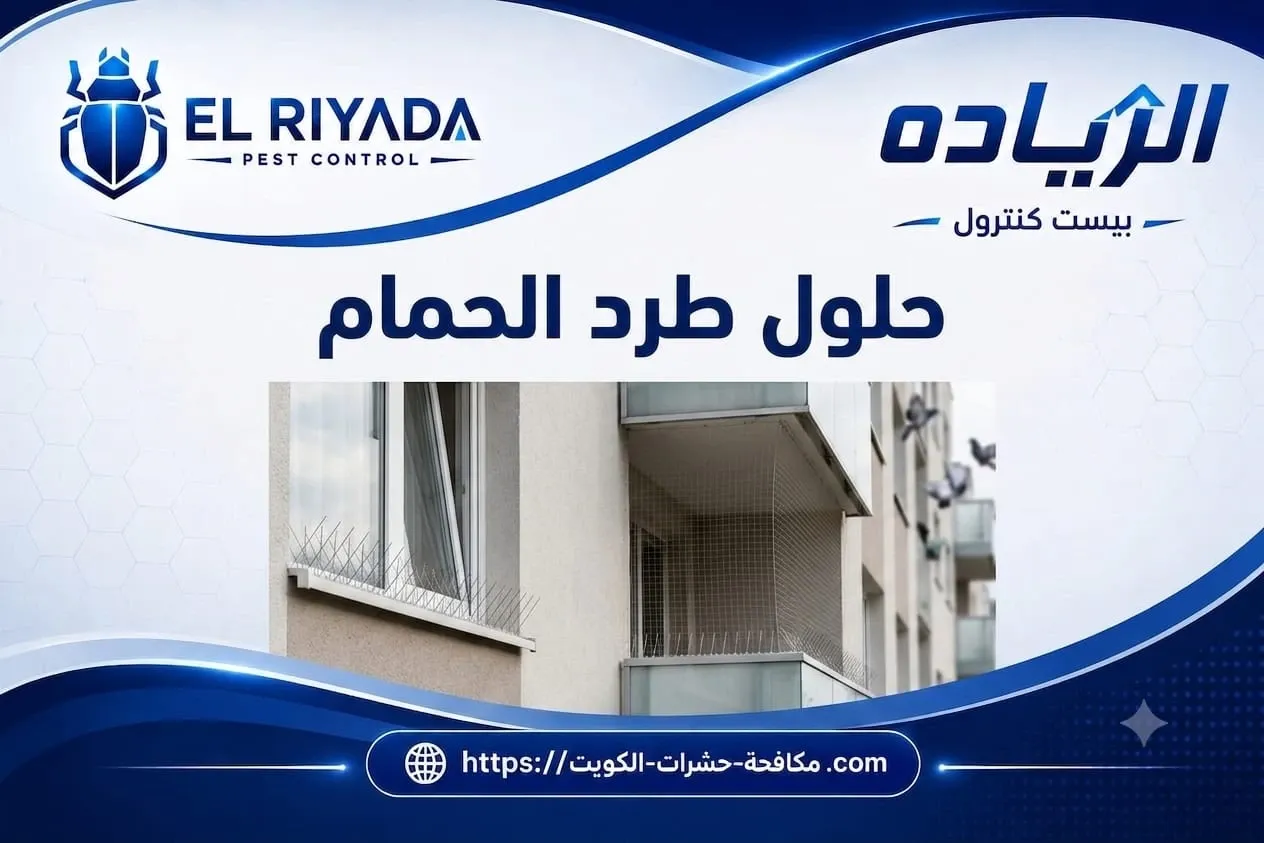
Buildings can be protected from pigeon droppings and nesting without killing or harming birds. The humane approach starts by understanding why pigeons are attracted to a place, then choosing a barrier or perch deterrent that does not trap birds or cause injury. In Kuwait, villa roofs, apartment balconies, AC openings, shop signs and large warehouse roofs all have different needs, so no single tool suits everyone.
This article is Al Reyada Pest Control’s complete guide to pigeon control in Kuwait. It explains how humane deterrents are chosen, when to use netting, spikes or wire, how active nests are managed and what an installation and maintenance quote should include. In each section it points you to the detailed guide for your situation: netting for building shafts, transparent netting for balconies, spikes for signs, the stainless versus plastic comparison and the comparison of lasers with physical solutions for large roofs. The aim is to protect your building responsibly and sustainably.
Why pigeon problems should be taken seriously
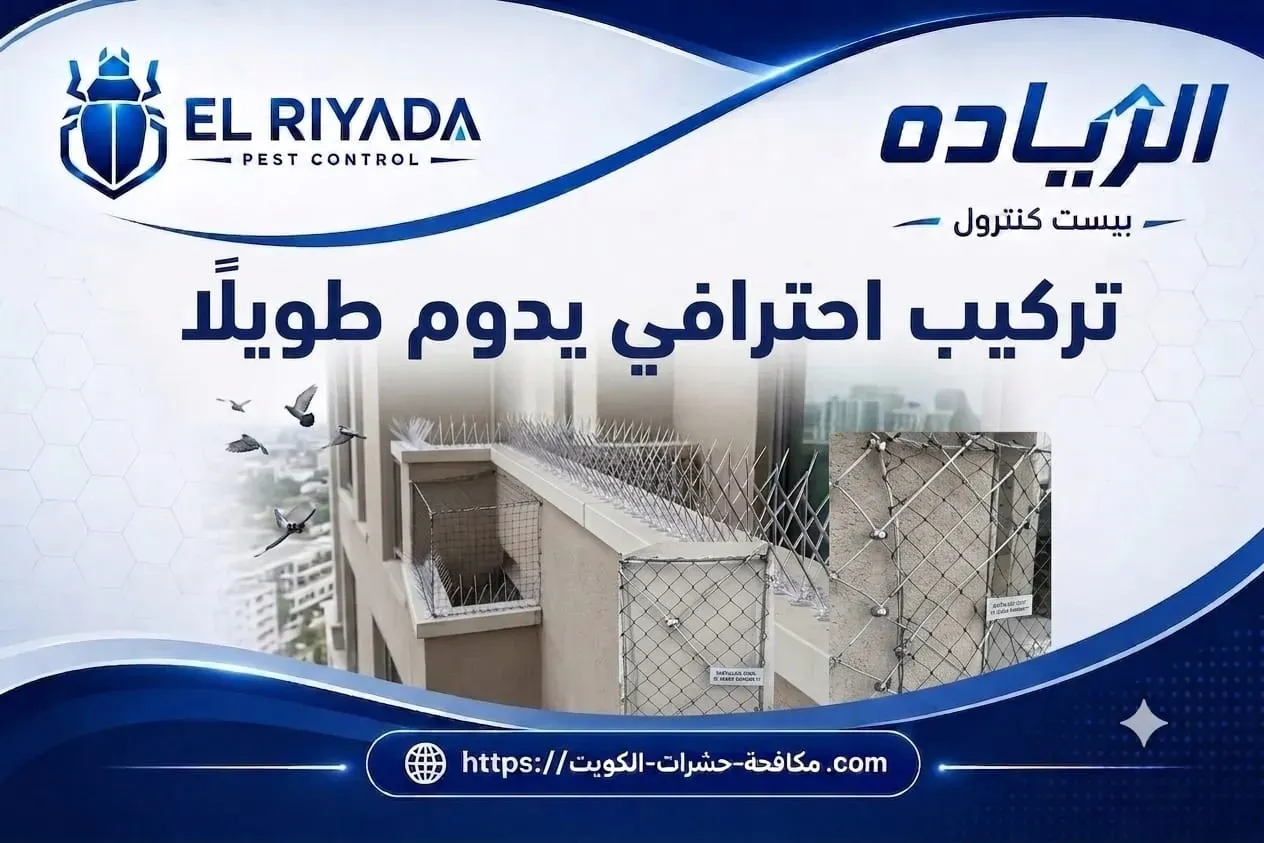
Pigeons are more than a visual nuisance. Accumulated droppings and nests cause:
-
Building damage: droppings are acidic and damage paint, stone and metal over time, while nests and feathers block drains and gutters.
-
Equipment damage: droppings and feathers clog AC filters, reduce efficiency and contaminate fresh-air intakes.
-
Health risks: dry droppings can become airborne dust carrying microbes harmful to the respiratory system, and nests may harbour mites and bird lice that move into flats.
-
Slip hazards: droppings on stairs, walkways and roofs make them slippery.
-
Reputational damage: a shopfront or building covered in droppings gives customers and tenants a poor impression.
What humane pigeon control means in practice
Humane prevention means changing access or perching while avoiding injuring birds or leaving them trapped in an enclosed space. Not every product described as safe achieves this automatically, because installation can turn a good tool into a hazard.
Workers and residents must also be considered: no sharp metal edges should be left in maintenance walkways and no barrier should block emergency exits. Safety covers people and birds alike.
Humane control means choosing a method that prevents landing or entry without poisoning, injuring or trapping birds inside the building. Work starts by observing perching and nesting sites and access routes before proposing any equipment. Where there is an active nest or chicks, we postpone closure or follow specialist guidance in line with local regulations. We never remove a nest and then close a site at random before confirming no birds remain that could become trapped in cavities. We photograph the situation from a safe distance and confirm whether birds or young are inside a cavity, rather than relying on droppings alone.
Understanding why pigeons gather before buying any device
Pigeons may be attracted by exposed food, water pooling from AC units, a wind-sheltered ledge or a cavity suitable for nesting. Dealing with the cause reduces the pressure on any later deterrent.
Watch perching spots, droppings and feathers instead of judging from one passing bird. Identifying repeated activity avoids installing large netting when the problem is a small spot that can be treated locally.
Treatment depends on behaviour. If birds stand on a narrow ledge, a suitable perch deterrent may be enough; if they enter a shaft or false ceiling, a continuous net barrier is needed. We never use sticky substances that damage feathers or tools that can trap feet or wings. The aim is not to move the problem to a neighbour, but to reduce attractants and protect sensitive areas through careful design. Choosing netting does not always mean covering a large area; at some sites closing one specific opening is less intrusive, better for the façade and easier to inspect later.
The most common attractants we see in Kuwait include residents feeding pigeons on roofs and window sills, AC condensation leaks that provide constant water, abandoned roofs full of old belongings and uncovered bins.
Which solution suits your location? A quick guide
|
Location |
Typical problem |
Best-suited solution |
Detailed guide |
|---|---|---|---|
|
Shaft between buildings |
Nesting on AC units and pipes |
Tensioned netting on a stainless frame |
Guide to pigeon netting for shafts |
|
Apartment or chalet balcony |
Pigeons entering, perching and nesting |
Clear or dark netting that keeps the view |
Guide to transparent balcony netting |
|
Shop sign or billboard |
Perching on letters and frames |
Spikes cut to the letters |
Guide to spikes for signs |
|
Roof edges, window sills and façades |
Perching on ledges |
Stainless or plastic spikes by location |
Stainless vs plastic comparison |
|
Large warehouse or factory roof |
Gathering and nesting around equipment |
Combination of netting, spikes and wire |
Laser vs physical solutions comparison |
|
Walls and long ledges |
Repeated perching |
Low-visibility tensioned wire |
Covered in this guide |
Humane netting to block access to voids
Netting suits shafts, balconies and voids pigeons enter, provided it is tensioned and fixed without gaps that let birds in and then trap them. We inspect and confirm the space is empty before closing it.
We design netting to allow maintenance access to AC units and services, using materials that withstand Kuwait’s sun, dust and salt. Torn or sagging netting is not humane, because birds can become entangled.
After installing protection we check that drainage, ventilation and maintenance routes still work, and look for gaps that could let a bird in but not out. We also show the property manager how to check for loose sections and report new nesting, without trying to handle injured birds directly. Success is measured by reduced entry and droppings while maintaining safety and animal welfare. If trapped or injured birds appear after installation, we stop any action that could worsen harm and deal with them safely rather than forcing them out.
Anti-perching spikes designed not to injure
Anti-perching spikes are used on suitable ledges to reduce landing space. They do not hurt birds; they simply make the surface uncomfortable, so pigeons go elsewhere. We use commercial systems designed for this purpose and install them according to their instructions, never improvised sharp wires.
If a ledge is wide or there is a perching spot behind the strip, spikes alone may not work. We measure ledge depth and lay out rows precisely, reducing the need to reinstall later. To choose the right material for your site, see our stainless versus plastic spikes comparison.
Tensioned wire for long ledges
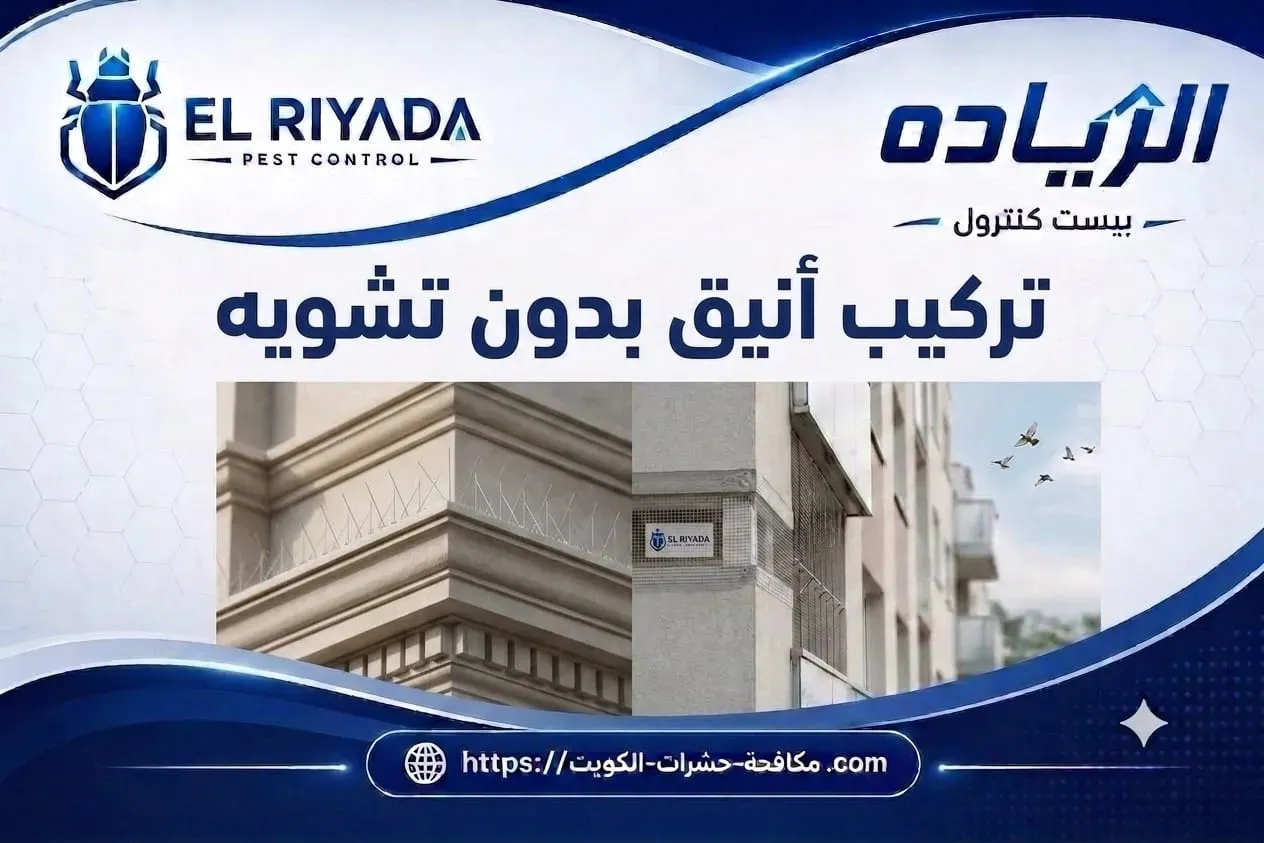
Tensioned wire is a low-visibility solution for long ledges, parapets, roof edges and balcony railings. Small posts are fixed along the ledge and thin stainless wires stretched between them at calculated heights, so pigeons find no stable landing place. It barely changes the façade’s appearance, making it ideal for buildings where architecture matters.
Responsible handling of nests, eggs and chicks
We never close an opening over an active nest, as this can separate parents from chicks or trap birds inside. We assess the nest’s status and follow local requirements.
Postponing part of the netting until activity ends may be the safest decision. We never use violent scaring or poisons as a shortcut.
Once nests are confirmed empty, they are removed completely along with surrounding material, because old nest remains draw pigeons back to the same spot and may contain insects and parasites.
Comparing humane methods by location
A balcony pigeons enter usually needs an entry barrier, while a ledge they only stand on may need just a local deterrent. A large roof with available food or water needs attractants controlled alongside protection.
We do not recommend random light or sound devices near residents if they cause disturbance or risk, and birds get used to many of them over time. We always choose the least intrusive measure that achieves the result, considering neighbours and other animals.
Cleaning droppings safely before installation
Dry droppings may contain irritant dust or contaminants, so we avoid dry sweeping or raising dust. We wet them with a disinfectant solution before removal and use suitable protective equipment such as masks and gloves depending on the level of contamination.
After cleaning we check surfaces for paint damage or blocked drains before fixing any barrier. Removing the evidence without treating the entry route usually means the mess returns quickly. We disinfect surrounding surfaces and treat nest-related pests if present.
Humane pigeon deterrent prices
Cost depends on the type of problem, ledge length or opening size, material, height, access difficulty and the amount of cleaning needed. The price of a metre of netting cannot be compared with a metre of spikes without considering what each does.
Our quotations itemise inspection, cleaning, installation and follow-up. A lower price may exclude surface preparation or safe access work, which directly affect quality and lifespan.
Mistakes that can make a humane solution harmful

-
Slack netting that pigeons can get caught in.
-
Spikes placed in walkways that can injure people.
-
Closing vents or drainage outlets, which can damage the building.
-
Bird glue, poisons and harmful traps, which are not humane and can cause suffering and health problems.
-
Closing openings over active nests, trapping birds or their young.
That is why we test the result after installation and focus on physical exclusion and environmental improvement within the rules.
Choosing a responsible pigeon deterrent installer
Ask the company: how do you confirm there are no chicks in openings? What is the plan if you find an active nest? How is netting safety checked after installation? What materials are used and how do they cope with Kuwait’s climate? Does the quote include cleaning and disinfection? These questions reveal the quality of diagnosis more than marketing photos.
At Al Reyada Pest Control we give every customer a written plan setting out materials, scope, nest handling and follow-up terms, and provide handover photos after installation.
Monitoring the site after preventing perching and nesting
Watch neighbouring ledges and new openings after installation, because birds may change where they perch. If a new problem appears, we adjust coverage based on what we observe rather than adding random devices.
Handover photos and checking fixing points after storms help detect damage early. A successful humane solution stays maintainable and protects the building without creating new hazards.
Practical example: a villa in Jabriya with pigeons in several places
A two-storey villa has pigeons nesting in three places: behind AC units on the upper balcony, on the roof edge and on the front window sills:
-
Survey: an active nest is identified on the balcony; the roof edge and window sills are perching spots only.
-
Plan: wait for the balcony nest to finish, then remove it, clean droppings and install dark netting that keeps the façade’s look; tensioned wire on the roof edge and slim stainless spikes on the window sills.
-
Result: nesting and perching stop in all three places, no bird is harmed and the façade stays clean.
Conclusion
Keeping pigeons away safely does not mean a magic device. It means understanding why pigeons gather and choosing the right physical solution for each place: netting for shafts, balconies and cavities, spikes for ledges and signs, tensioned wire for long ledges, together with responsible nest handling, safe droppings removal and follow-up after installation. That protects your building, your family’s health and your shop’s reputation without harming birds.
Al Reyada Pest Control provides all humane pigeon control solutions for homes, apartment buildings, shops and warehouses across Kuwait. Contact us via the WhatsApp button on our website, send photos of where pigeons perch and nest and your area, and we will recommend the right solution and arrange a survey.
Frequently Asked Questions
Can pigeons be kept away without harming them?
Yes. Netting, spikes and tensioned wire only prevent access or perching, without poisoning, injuring or trapping birds, combined with responsible nest handling.
What is the difference between netting and spikes?
Netting stops pigeons entering a whole area such as a shaft or balcony, while spikes only stop perching on ledges. The solution depends on how pigeons use the location.
What do you do if you find a nest with eggs or chicks?
We do not close a site over an active nest. We postpone closure until activity ends in line with local requirements, then remove the nest, clean and install protection.
Are sound or light devices effective against pigeons?
Their effect is usually temporary because birds get used to them, and they may disturb residents. Physical solutions are more reliable.
Are pigeon droppings a health risk?
Dry droppings can carry microbes harmful to the respiratory system when they become airborne, and nests may carry parasites, so they should be cleaned safely with wetting and disinfection.
How much does humane pigeon deterrent installation cost?
It depends on the type of solution, opening size or ledge length, height, access difficulty and the amount of cleaning. We set an accurate price after a survey.