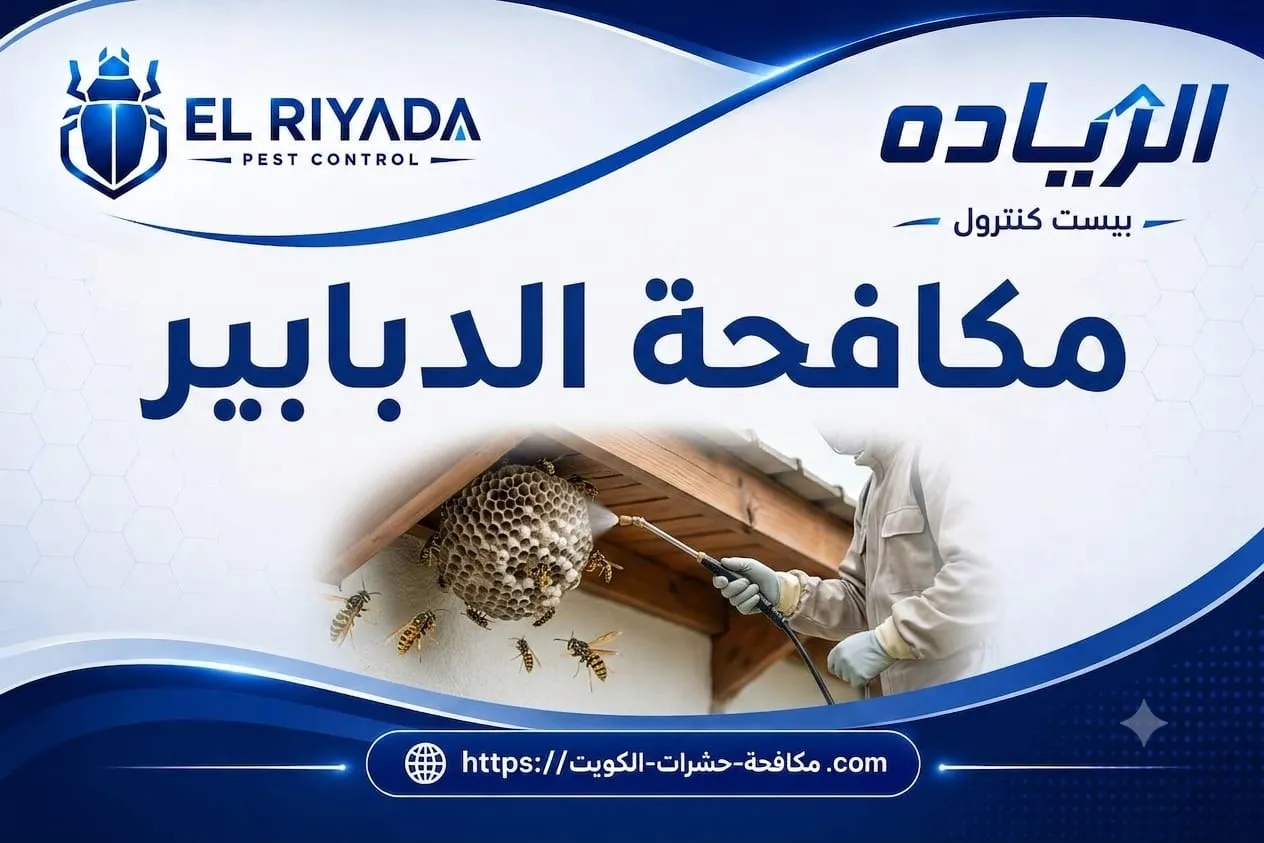
Finding wasps around palm or sidr trees in a home garden does not necessarily mean there is a nest inside the tree. Some wasps may be attracted to flowers, fruit, or insects living on the branches, while other species choose trunk cavities or dense foliage to build their nests. The problem becomes more serious when wasps repeatedly appear in areas used by family members, particularly near outdoor seating areas or garden pathways. Effective control therefore begins by identifying why the wasps are present and locating any nest before choosing an appropriate treatment rather than spraying the entire tree indiscriminately. Protecting residents while preserving palm trees, sidr trees, and surrounding plants is equally important throughout the service.
Wasps in Palm Trees

Noticing wasps in palm trees requires examining the nature of their activity before deciding whether spraying is necessary. Palm trees have closely arranged frond bases and concealed spaces that can be difficult to see from the ground. Some wasp species may use these areas for shelter or nesting. However, wasps flying around the crown do not automatically indicate the presence of a nest, as the insects may simply be searching for food or moving between trees.
Assessment begins by observing the direction of wasp movement from a safe location. If they repeatedly enter the same point between the frond bases, this is a sign that deserves professional inspection. If they move between several palm trees or around fruit without returning to a fixed location, their activity may be related to feeding rather than nesting.
The level of risk also depends on where the palm tree is located. A tree close to a house entrance or family seating area requires different precautions from one growing at the far end of the garden away from everyday activity. The height of the palm and density of its fronds also affect how easily the nest can be seen and reached.
Common mistakes include shaking the fronds or climbing the palm to search for a nest. Disturbing wasps may cause them to emerge defensively, while working at height introduces an additional risk of falling. The activity location should therefore be identified before selecting a control method, with qualified professionals involved whenever necessary.
-
Repeated wasp movement into a specific location between palm frond bases may indicate a potential nesting site and requires closer inspection rather than assuming that every part of the palm needs spraying.
-
Wasps appearing around palm fruit may be searching for food, particularly when damaged or fallen fruit is present, making it important to distinguish feeding activity from an established nest.
-
A palm tree located near a seating area or frequently used entrance makes it more important to manage people's movement around the tree until the situation has been assessed, because the likelihood of contact with insects depends on how the space is used.
-
Avoiding climbing the palm or disturbing its fronds to search for a nest protects against falls and stings while leaving access to elevated locations to professionals with suitable equipment and experience.
Wasps in Sidr Trees
The presence of wasps in sidr trees may be associated with the tree's natural characteristics, particularly during flowering periods when different insects visit its blossoms to obtain food. For this reason, every wasp seen on sidr flowers should not be treated as evidence of a nest requiring removal. Distinguishing insects visiting flowers from wasps repeatedly returning to a fixed location among the branches is essential for making an appropriate decision.
Sidr trees develop branching structures that may become dense as they grow, with foliage sometimes blocking visibility of the inner sections. If a nest exists among the branches, it may remain unnoticed until someone approaches the tree for pruning, fruit harvesting, or cleaning the surrounding area. Randomly handling the branches can therefore be dangerous, especially when the wasps are active.
It is also important to consider beneficial insects visiting sidr blossoms, including bees. Spraying the entire tree simply because flying insects are present may expose pollinators to pesticides even though they are not the target of the problem. Any treatment must therefore consider the flowering period, product instructions, and restrictions concerning plants and pollinating insects.
If the sidr tree is close to a garden pathway, use of the immediate area can be temporarily reduced until the nest's location is clarified. However, if the activity consists only of insects visiting flowers without evidence of a nest or defensive behavior, inspection and monitoring may be more appropriate than chemical intervention.
-
Observing wasps during the sidr flowering period requires checking the nature of their activity before spraying, because searching for food among blossoms is different from repeatedly entering a concealed nest inside the tree.
-
Inspecting insect movement around the inner branches from a safe distance helps determine whether wasps are returning to one particular location instead of treating dense foliage itself as evidence of a nest.
-
Avoiding widespread spraying of flowering sidr trees when pollinators are active protects beneficial insects from unnecessary exposure and ensures that control decisions are based on an actual hazard and the product's permitted uses.
-
Postponing pruning or fruit harvesting near an active nest reduces the likelihood of disturbing wasps during activities that involve moving branches or reaching into dense foliage.
Wasp Nests in Trees
Finding a wasp nest in a tree is different from simply seeing wasps flying around leaves or fruit. A nest may be visible and suspended from a branch, or it may be hidden inside a trunk cavity or among tangled branches. Its location affects how it can be assessed and reached, which means there is no single removal method suitable for every nest.
Inspection begins by identifying the tree where activity repeatedly occurs and observing the location where wasps enter or exit. Branches should not be shaken, trunks struck, or water directed toward the suspected nest in an attempt to expose it, because these actions may provoke the insects and increase the likelihood of stings.
It is also important to understand that the visible shape and size of a nest do not necessarily indicate the level of danger. Part of the nest may be concealed inside a cavity, and the number of wasps visible outside at any given moment does not necessarily represent the total number associated with it.
Handling a nest positioned low on an exposed branch differs from dealing with one high in the crown of a palm tree or surrounded by dense sidr branches. In every case, the safety of the tree and its surroundings must be considered. Fire and forceful removal methods should be avoided because they can cause injuries or damage vegetation.
-
Determining whether the nest hangs from a branch or is located inside a cavity helps assess access difficulties and select an appropriate approach without unnecessarily damaging parts of the tree.
-
Avoiding estimates of wasp numbers based only on the visible size of the nest prevents the risk from being underestimated, because some nesting sites are concealed and their full extent cannot be determined through a superficial observation.
-
Avoiding striking branches or directing water at the nest reduces the likelihood of defensive wasp activity and prevents inspection from becoming a direct confrontation with the insects.
-
Considering the nest's height and surrounding branch density when planning removal ensures that access depends on suitable equipment and professional expertise rather than improvised methods that may expose people to falls or stings.
Wasp Control in the Garden
Effective wasp control in the garden requires understanding why the insects are present before deciding how to manage them. A garden may contain flowering trees, fallen fruit, water sources, and suitable nesting locations, but these features do not all serve the same purpose. It is therefore important to distinguish wasps visiting plants in search of food from those defending a nest near areas used by the household.
Inspection begins by identifying locations where sightings repeatedly occur and determining how close they are to pathways, seating areas, and children's play equipment. If a nest is located beside a place used every day, securing that area becomes a higher priority than dealing with scattered insects visiting flowers without any visible nest.
Good pest control does not mean spraying every palm tree, sidr tree, shrub, and ground surface. Untargeted spraying may expose plants and beneficial insects to pesticides without addressing the actual cause of the problem. Treatment should instead be linked to the nest's location, the insect species, and the instructions for products approved for use in gardens.
Certain food sources that attract wasps can also be reduced, including damaged fallen fruit and uncovered food waste near outdoor seating areas, without removing or damaging the trees.
-
Dividing the garden into areas of sightings and confirmed activity helps identify locations that genuinely require intervention instead of applying a general treatment that may be unnecessary for many plants.
-
Checking fallen fruit and food waste around seating areas reduces some food sources that may attract wasps without affecting healthy trees or changing the garden's design.
-
Distinguishing a nest near a frequently used pathway from wasps visiting flowers ensures that the level of intervention reflects the likelihood of residents coming into contact with the insects.
-
Selecting treatment according to the nest's location and product instructions supports safe application and reduces unnecessary pesticide exposure for pollinators and surrounding plants.
Removing a Wasp Nest from a Palm Tree

Removing a wasp nest from a palm tree requires special attention because some palms are tall and their frond bases can conceal a nest from view. A homeowner may notice wasps entering the spaces between the fronds without being able to determine the nest's exact position or size. Removal should therefore never begin on the basis of guesswork.
The service starts by assessing the palm's height and whether the nesting location can be accessed safely, while establishing whether the nest is visible or concealed within the crown. If reaching it requires working at height, suitable access equipment should be used by qualified professionals rather than attempting to climb the palm through improvised methods.
A common mistake is cutting the fronds surrounding the nest to expose it before wasp activity has been controlled. Moving the fronds may disturb the insects, while falling palm material can create additional risks for people below.
After the nest has been addressed, it is important to ensure that the work has not unnecessarily damaged healthy parts of the palm. Products or treatments should not be applied to plant structures unless their instructions specifically permit that use.
-
Assessing the palm's height before choosing an access method prevents unsuitable ladders or climbing techniques from being used near an active nest where sudden movement could make the situation more dangerous.
-
Locating the nest between the frond bases helps direct intervention toward the required area rather than cutting large sections of the palm crown in search of an unconfirmed nesting site.
-
Keeping people away from the space beneath the palm during removal reduces exposure to wasps and protects against risks associated with tools or materials that may move while the nest is being accessed.
-
Reviewing the condition of the fronds after removal helps identify any damage associated with the intervention, while necessary pruning work should be referred to a professional experienced in palm care.
Wasp Spraying Services for Gardens in Kuwait
When searching for wasp spraying services for gardens in Kuwait, it is important to understand that spraying is not necessarily the first or only appropriate response in every situation. The problem may involve a clearly visible nest on a low branch, activity inside the crown of a tall palm, or wasps repeatedly visiting sidr blossoms without any nest in the garden.
A suitable service should therefore begin by identifying the type of problem and its location. If a nest requiring treatment is confirmed, the specialist should select an appropriate method based on its position, pesticide instructions, and restrictions relating to fruit-bearing plants and pollinating insects. It should never be assumed that every product designed to control wasps is suitable for direct application to palm or sidr trees.
The conditions in a residential garden also differ from those in an unused outdoor space. There may be seating areas close to the tree, children's play equipment, pets, or fruit that will be harvested for consumption. These details influence product selection, application locations, and necessary safety precautions.
When requesting the service, it is helpful to describe the tree where activity occurs, its position relative to the house, and whether the nest can be seen. This information helps prepare for the inspection but does not replace an actual assessment of the site.
-
Explaining whether the problem involves a palm, sidr, or another tree species helps assess branch structure, height, and accessibility instead of treating every tree as though it requires the same approach.
-
Mentioning fruit, flowers, or bee activity near the wasps allows pollinators and agricultural uses to be considered when selecting treatments permitted for the location.
-
Identifying how close the tree is to seating areas and children's spaces helps establish suitable precautions for residents during nest treatment without unnecessarily restricting the rest of the garden.
-
Asking about the spraying area, products used, and application locations clarifies whether the service targets a specific nest or proposes a broader treatment that should have a clear justification.
Hornets and Wasps in Yard Trees
When homeowners notice hornets or wasps in yard trees, they may use these names to describe different types of flying insects that resemble wasps. The commonly used name alone is therefore not enough to determine whether pest control is needed, particularly when the trees are flowering and attract beneficial insects such as bees.
Distinguishing between insects becomes especially important when activity is spread across several trees. Wasps may move between palm and sidr trees in search of food, while insects associated with a particular nest tend to concentrate around an entry and exit route that may be observed from a safe distance.
It is useful to identify when and where activity repeatedly occurs without approaching the branches or attempting to catch the insects. If sightings increase around damaged fruit, removing fallen fruit may help reduce certain attractants. However, defensive activity around a specific branch should prompt an assessment of whether a nest is present.
Not every flying insect should automatically be treated as a pest requiring spraying, because some contribute to plant pollination or help reduce populations of other insects.
-
Distinguishing wasps and hornets from bees and similar insects prevents pest control from being directed at beneficial species simply because they look alike or visit the same tree.
-
Observing whether insects move between trees or gather around one location helps determine whether their activity is associated with food or a potential nesting site.
-
Identifying damaged fruit or food waste near trees allows removable attractants to be addressed instead of relying on spraying leaves and branches without a proper diagnosis.
-
Recording where activity occurs before requesting an inspection provides information that helps the specialist focus on the relevant tree without unnecessarily disturbing its branches.
Locating a Wasp Nest in a Tree
Locating a wasp nest in a tree begins by observing the insects' flight paths without approaching the suspected nest. Wasps repeatedly returning to a particular location may indicate a nesting site, but identifying its exact position requires attention to entry and exit routes and the structure of the surrounding branches.
In palm trees, insects may disappear between the frond bases, while in sidr trees a nest may be concealed among tangled branches or inside a trunk cavity. Differences in tree structure therefore affect the inspection method, and searching only for an exposed hanging nest is not sufficient in every case.
Common mistakes include using a stick to move branches or approaching with a phone camera to obtain a clearer photograph. Moving too close may disturb the wasps, particularly when the nest is near face level or above someone's head.
If the location cannot be identified from the ground, professional inspection using suitable access equipment is safer than climbing the tree or trying to expose the nest by force. The homeowner can simply describe the tree and the section where insect movement repeatedly occurs.
-
Observing the direction in which wasps return to the tree from a safe distance helps narrow the search area without entering a location that may be close to the nest.
-
Distinguishing a hanging nest from one concealed inside a cavity helps determine the access requirements and prevents reliance on superficial visual inspection alone.
-
Avoiding movement of dense branches to expose the nest reduces the possibility of provoking wasps and protects people from stings while they are close to the foliage.
-
Describing the height of the activity point and its position relative to the trunk helps the specialist assess inspection difficulties and prepare an appropriate access method before beginning work.
Preventing Wasps from Nesting in Trees

Preventing wasps from nesting in trees depends on monitoring the garden and reducing controllable conditions without damaging palm or sidr trees or interfering with their natural functions. It is not possible to prevent all flying insects from visiting trees, particularly during flowering and fruiting periods. The presence of wasps in the garden also does not necessarily mean they are looking for somewhere to build a nest.
Prevention begins by reviewing trees where nests have previously appeared, paying attention to dense branches and cavities that are difficult to inspect from the ground. However, trunk cavities should not be sealed and fronds should not be cut indiscriminately, because some of these actions may damage the tree or conceal a problem that requires assessment by a plant-care specialist.
Good garden maintenance can reduce certain unnecessary food sources, including damaged fallen fruit and exposed food waste. Nevertheless, removing these sources cannot guarantee that nesting will be prevented, because wasps choose nesting locations for several reasons that vary according to species and environment.
It is preferable to visually check trees before pruning or harvesting fruit, particularly in locations where wasp activity has previously been recorded. If insects are repeatedly moving toward a specific location, the situation should be assessed before the branches are disturbed.
-
Monitoring trees where nesting has previously occurred helps detect new activity in known locations instead of waiting for a problem to emerge during pruning or everyday garden use.
-
Removing damaged fallen fruit and uncovered food waste reduces certain attractants without spraying healthy trees or removing flowers that provide resources for pollinators.
-
Avoiding random frond cutting or sealing trunk cavities protects tree health and prevents measures that may damage the plant without guaranteeing that wasps will be excluded.
-
Visually checking trees before gardening work begins helps identify unusual movement around branches and allows work to be postponed if signs of an active nest appear.
Cost of Removing a Wasp Nest from a Palm Tree
The cost of removing a wasp nest from a palm tree is affected by several factors related to the palm's characteristics, the nest's location, and accessibility. A nest positioned at a low height in a clearly visible location does not necessarily require the same procedures as one concealed among fronds at the top of a tall palm.
The palm's height is one of the main factors influencing the scope of work because reaching the nest may require suitable equipment and additional safety procedures. Frond density, nest visibility, and the palm's position relative to buildings, walls, and pathways can also affect how the service is carried out.
Handling a single nest whose location is known also differs from investigating wasp activity around several palms without knowing its source. In the second situation, a wider inspection may be necessary before identifying which tree contains the nest.
When requesting a quotation, it is helpful to provide the palm's approximate height, whether the nest is visible, and where the tree is located in the yard. Nobody should approach the nest to take a photograph if doing so requires climbing the palm or standing close to the wasps.
A proper comparison between quotations depends on understanding what each offer includes in terms of inspection, removal, safe access procedures, and follow-up, rather than relying on a figure without knowing the details of the work.
-
Providing the palm's height and the suspected nest location helps estimate access requirements and prevents a low nest from being compared with one that requires specialized equipment for working at height.
-
Explaining whether wasps appear in one palm or several trees clarifies the inspection scope required before determining the appropriate service and its cost.
-
Checking whether the quotation includes safe access equipment and removal of nest remains when possible makes price comparisons reflect the actual work involved rather than the spraying cost alone.
-
Avoiding requests for a final price based only on the number of visible wasps supports a more realistic assessment because access difficulties and nest location may have a greater influence on the service requirements.
Why Choose Al Reyada Pest Control in Kuwait
When considering why Al Reyada Pest Control is a strong choice for pest control in Kuwait for wasps found in palm and sidr trees, the service should be evaluated according to its ability to identify the problem without unnecessarily harming trees or beneficial insects. Al Reyada Pest Control can be a strong option when inspection begins by distinguishing wasps visiting flowers and fruit from insects associated with an actual nest requiring removal.
These situations require an understanding of the site because a nest may be elevated within the crown of a palm tree or hidden among sidr branches. Identifying the nesting location and assessing safe access methods are therefore more important than deciding to spray the entire tree as soon as wasps are seen.
The way the garden is used must also be considered. Trees may stand close to family seating areas, children's pathways, or fruit-harvesting locations, while pollinating insects may be active around the flowers. Treatment must therefore respect product instructions, permitted application locations, and precautions intended to protect people and plants.
The value of the service is also reflected in explaining what can be done after nest removal, such as monitoring the tree, removing unnecessary food sources, and checking for renewed activity before pruning.
-
Connecting the inspection to the tree species and the nature of wasp activity helps Al Reyada Pest Control direct intervention toward the actual problem without treating every visit to flowers as evidence of a nest.
-
Assessing palm height and sidr branch density before removal makes safe access an essential part of the service plan instead of relying on attempts that could expose workers or residents to danger.
-
Considering fruit, flowers, and pollinating insects when selecting treatment preserves the garden's function and reduces the likelihood of pesticides being applied in unsuitable locations.
-
Explaining follow-up procedures after nest removal helps homeowners monitor their trees safely and understand when new sightings require additional professional inspection.
Conclusion
The presence of wasps in palm and sidr trees does not mean every tree in the garden needs spraying. Their activity may be associated with flowers, fruit, or an actual nest concealed among palm fronds or branches. Identifying the cause is therefore the first step before selecting treatment.
Nests located in tall or densely branched trees require careful assessment of their position and accessibility to avoid exposing people to stings or falls. Fruit-bearing plants, pollinators, and areas used by the family must also be considered throughout the control process.
The most appropriate approach combines careful inspection, nest removal when necessary, targeted treatment, and suitable prevention while preserving the health of palm and sidr trees instead of relying on unjustified widespread spraying.
Frequently Asked Questions
Why do wasps appear around palm trees?
Wasps may be searching for food or using spaces between palm frond bases for nesting. The presence of a nest can only be confirmed after assessing insect movement and the locations where they enter and exit.
Does finding wasps in a sidr tree mean there is a nest?
Not necessarily. Wasps may visit sidr flowers to obtain food. The possibility of nesting becomes more relevant when repeated movement toward a fixed location inside the tree is observed.
Should all garden trees be sprayed when wasps appear?
No. The cause of the activity and the nest's location, if one exists, should be established before treatment because widespread spraying may unnecessarily expose plants and pollinators to pesticides.
Where can wasps build nests inside palm trees?
Some nests may be located between frond bases or in sheltered spaces. However, locating them requires safe inspection, and the fronds should not be disturbed randomly in an attempt to find the nest.
Can a wasp nest be removed from a palm without climbing it?
That depends on the nest's height, location, and accessibility. Suitable access equipment operated by qualified professionals may be necessary.
Can branches containing a wasp nest be cut?
Branches should not be cut or disturbed while an active nest is present without professional assessment, because doing so may provoke wasps and expose people to stings.
Are wasps visiting sidr flowers always harmful?
No. Some wasps visit flowers to obtain food, and certain species contribute to pollination or prey on other insects. The nature of their activity should therefore be identified before control measures are considered.
How can I locate a wasp nest in a tree?
The direction of wasp movement can be observed from a safe distance to determine whether the insects repeatedly return to a fixed location. Close inspection and access to branches should be left to qualified professionals.
Do fallen fruits attract wasps?
Some ripe or damaged fruits may attract wasps searching for food. Removing damaged fallen fruit can therefore help reduce certain attractants.
Can wasp spraying affect bees visiting sidr trees?
Some pesticides can harm bees and other pollinators. Product instructions, flowering periods, and application locations must therefore be considered, and unnecessary treatment should be avoided.
Can wasps be permanently prevented from nesting in palm trees?
No method can guarantee that all future nesting will be prevented. However, monitoring trees, reducing unnecessary food sources, and identifying activity early can improve prevention.
Is wasp control in palm trees different from treatment in sidr trees?
Yes. Nest location, branch structure, tree height, and accessibility may differ. Flowers and pollinators associated with sidr trees also require particular consideration.
What factors determine the cost of removing a wasp nest from a palm tree?
Factors include palm height, nest location and visibility, access difficulties, the number of trees requiring inspection, and the procedures needed to remove the nest safely.
What should I do if I discover a wasp nest while pruning a tree?
Stop working and move away without attempting to disturb or knock down the nest. Keep other people away and request professional assessment before resuming pruning.
Why choose Al Reyada Pest Control for wasps in trees?
Al Reyada Pest Control can be a strong option when the service focuses on locating the nest, distinguishing feeding activity from nesting, and selecting appropriate treatment that considers residents' safety, the health of palm and sidr trees, and beneficial insects.