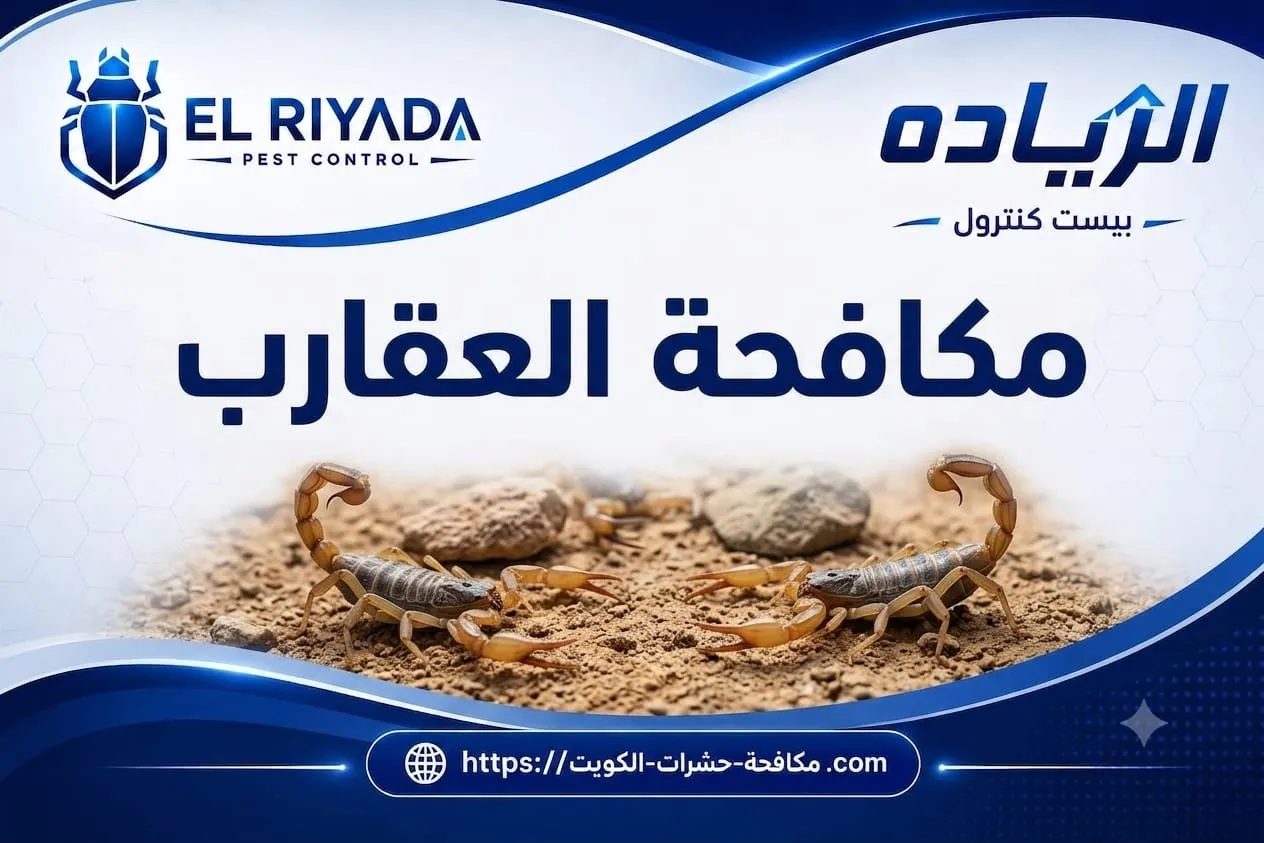
Scorpions are part of Kuwait’s desert, and they are one of the biggest worries for families preparing for camping season. A sting in the middle of the night, far from hospital, with children at the camp, is a situation nobody wants. The good news is that most incidents can be avoided by choosing the site carefully, inspecting it before the tents go up and treating it correctly.
This article explains how scorpion inspection and control for Kuwait desert camps works before tents are pitched, why inspecting before set-up matters more than spraying afterwards, and which habits draw scorpions into a camp, with tips for desert areas in Kabd, Jahra, Subiya, Salmi and Wafra.
Scorpions in Kuwait’s desert
One of the best-known scorpions in Kuwait is the black fat-tailed scorpion, a species with potent venom whose sting must be taken seriously, alongside yellow and light-brown scorpions found in sandy and rocky areas. They all share habits that help us control them:
-
Nocturnal: they hide by day and hunt after sunset.
-
Fond of tight shelters: under stones, in burrows, beneath wood, cardboard and old tyres, and in cracks.
-
Follow their prey: they eat insects and spiders, so anywhere with many insects attracts them.
-
Glow under ultraviolet light: a scorpion’s body fluoresces greenish under a UV torch, our most important tool during night inspections.
As the weather cools, scorpion activity gradually slows, but they do not disappear. They look for warm shelter, which they may find under tent flooring or among camp equipment.
Choosing the camp site in the first place
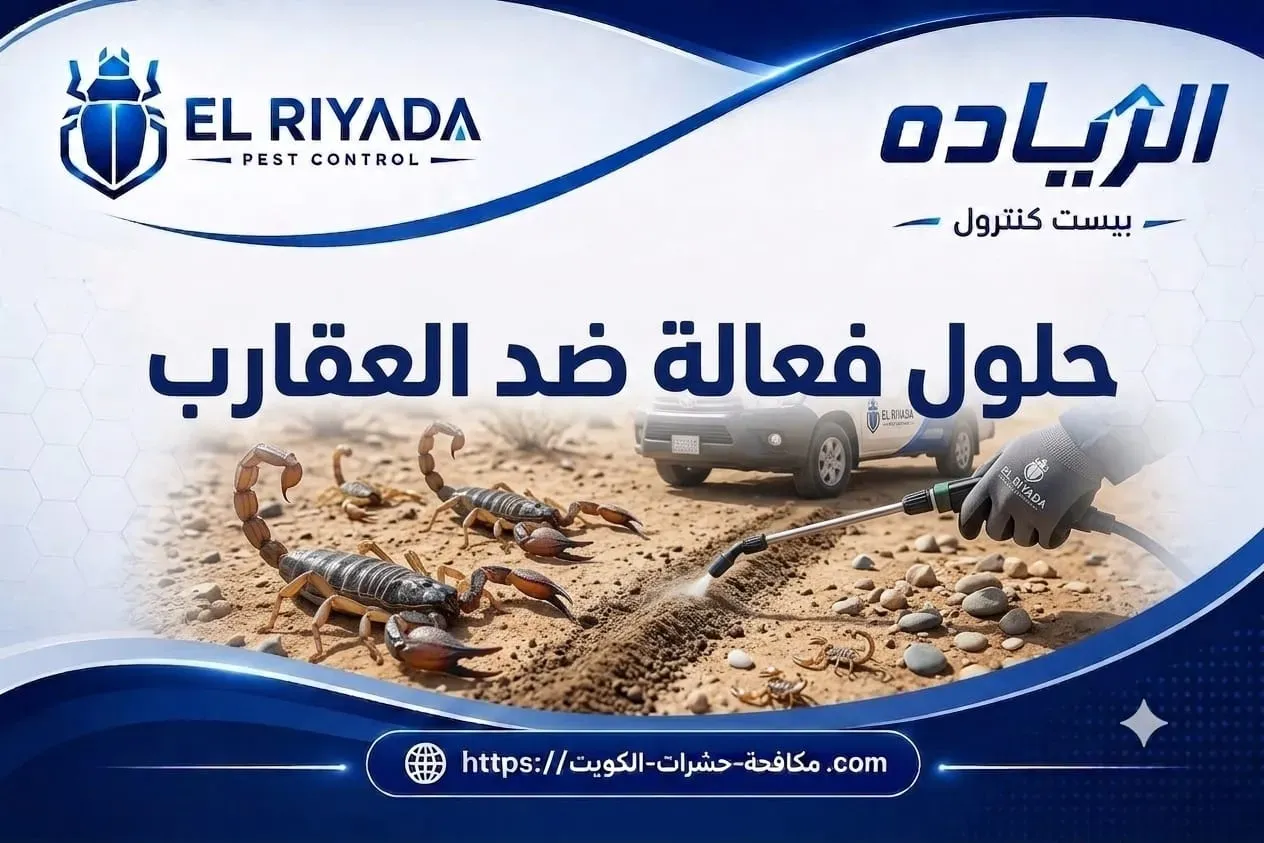
Before any treatment, the ground itself determines half the risk. When we assess proposed sites we recommend:
-
Preferring flat sandy ground over rocky or gravel areas full of cracks and shelters.
-
Avoiding wadis and low-lying ground where shrubs and moisture gather after rain.
-
Staying away from old camp remains and dumping spots, which attract both insects and scorpions.
-
Noting shrub density: ground covered in low desert shrubs usually has more burrows.
-
Asking neighbouring camps what they saw in previous seasons.
If the plot is already allocated and cannot be changed, we compensate with a more detailed inspection, a wider barrier and closer follow-up.
Why inspect before the tents go up?
Many camp owners ask for treatment once set-up is complete. The problem is that tents, flooring and rugs then cover burrows and hiding places, leaving scorpions underneath where children sit. Inspecting before set-up gives us:
-
A full view of the ground, burrows and stones.
-
The chance to remove shelters before they are covered.
-
Treatment of the soil where the tents will stand before flooring goes down.
-
A realistic risk assessment, sometimes with advice to move the camp a few metres away from a rocky patch full of burrows.
Inspection steps
Daytime inspection
-
Walk the entire proposed camp area plus a wider margin.
-
Locate small burrows in the sand, usually oval openings under shrubs or stones.
-
Note large stones, timber and debris from previous camps.
-
Identify insect hotspots, such as old food scraps or rubbish.
-
Mark the planned locations for tents, kitchen and toilets.
Night inspection
An hour or two after sunset, the technician returns with a UV torch and scans the site. Active scorpions show up clearly with a greenish glow, so we can estimate their number and pinpoint where they concentrate. This inspection gives a picture that daylight simply cannot.
Preparing the site and removing shelters
Before pitching tents we recommend:
-
Removing stones, timber and debris from tent locations and their surroundings.
-
Levelling the ground and closing visible burrows after treatment.
-
Keeping firewood away from tents on a raised rack instead of piling it on the sand.
-
Not leaving cardboard and bags on the ground for long periods.
-
Planning the waste area well away, because rubbish attracts insects and insects attract scorpions.
How camp scorpion treatment works
Scorpion treatment differs from treating flying insects. Scorpions are tough, and a quick pass with a sprayer is not enough. We work on several levels:
|
Level |
What we treat |
Purpose |
|---|---|---|
|
Burrows and shelters |
Visible burrows and under stones before removal |
Target scorpions where they hide |
|
Tent footprint |
Soil where tents will stand, before flooring |
Stop scorpions emerging beneath tents |
|
Perimeter barrier |
A band around the whole camp |
Reduce scorpions entering from outside |
|
Prey insect control |
Insect and rubbish areas |
Remove what attracts scorpions |
|
Night follow-up check |
The site a few days after treatment |
Confirm activity has dropped |
We use licensed products for outdoor use, follow label instructions and drying times, and keep away from drinking water and livestock.
Setting up tents after treatment

-
Raise the tent floor slightly where possible, or use a sealed plastic groundsheet stitched to the tent wall.
-
Close lower openings and check zips are intact.
-
Keep curtains and blankets off the ground, as they act as bridges for scorpions.
-
Use raised beds or mattresses for sleeping and keep them away from the tent wall.
-
Place outdoor lighting away from the entrance, because light attracts insects and insects attract scorpions.
Daily habits that protect your family
-
Shake out shoes and clothes before wearing them, and keep shoes in closed boxes or bags at night.
-
Check bedding and blankets with a torch before sleeping.
-
Never walk barefoot around the camp at night.
-
Do not put your hand under stones or into the woodpile without gloves.
-
Teach children never to touch a scorpion, even one that looks dead.
-
Keep a small UV torch at camp to check suspicious areas at night.
What to do if someone is stung
A scorpion sting is a medical matter, especially for children, older people and anyone with chronic illness. General steps:
-
Keep the person calm and the stung limb still.
-
Call emergency services on 112 or go to the nearest hospital immediately.
-
Do not cut the wound, try to suck out venom or apply a tight tourniquet.
-
Apply a cold compress on the way.
-
If possible, photograph the scorpion from a safe distance to help the doctor, without trying to catch it.
Before camping, find out where the nearest hospital or clinic is and how to reach it at night.
A camp safety kit
We advise every camp to keep a simple kit in a place everyone knows:
-
A small UV torch and a strong regular torch.
-
Thick leather gloves for handling firewood and equipment.
-
Long tongs and a heavy plastic container with a lid.
-
Cold packs and a first-aid kit.
-
A card with the emergency number 112 and the location of the nearest hospital.
-
Sealable bags for storing shoes and clothes overnight.
Having these ready turns a midnight scorpion sighting into a calm, quick response instead of panic.
Mistakes that attract scorpions
-
Pitching tents over stones and shrubs without clearing them.
-
Piling firewood directly on the ground beside the tent.
-
Leaving rubbish and food scraps uncovered, drawing insects and the scorpions that hunt them.
-
Bright lights at the tent entrance.
-
Treating the camp once after set-up and relying on it all season.
-
Leaving shoes outside overnight.
Follow-up during the season
Scorpions come from the surrounding desert, and a camp does not exist in isolation. We recommend a follow-up visit two to three weeks after the first treatment and renewing the perimeter barrier as needed, especially after rain or strong winds that move sand and cover the treatment. Camps used intermittently should be checked before each return after a long absence.
A dedicated service for rental and company camps

Owners of rental camps and companies that organise camps for staff are responsible for the safety of many visitors. For these camps we offer a programme that includes a pre-set-up inspection, full treatment of tent footprints and the perimeter barrier, a UV night inspection before the first booking and regular follow-up visits throughout the season. After every visit the owner receives a written report on the work done and activity levels, along with short safety instructions that can be posted for guests, covering shaking out shoes, not walking barefoot at night, the emergency number and the nearest hospital.
Conclusion
Scorpion control for desert camps in Kuwait gives the best results when it starts before the tents go up, with daytime and night inspections, shelter removal, treatment of the tent footprint and a perimeter barrier, supported by simple daily habits that protect the family. Al Reyada Pest Control works across desert areas in Kabd, Jahra, Subiya, Salmi and Wafra.
Book a site inspection and treatment before set-up: call or WhatsApp 65594848. Send us your camp location, size and set-up date, and we will schedule the inspection and treatment at the right time.
Frequently Asked Questions
When should I treat my camp for scorpions?
Ideally just before the tents are pitched, once the site is chosen, followed by a check two to three weeks later and barrier renewal as needed.
Can you guarantee a scorpion-free camp?
No one can guarantee that in the open desert, but inspection, site preparation and a perimeter barrier reduce the risk significantly.
Is UV inspection really necessary?
It is the most accurate way to locate active scorpions at night, because their bodies glow under ultraviolet light.
Is treatment safe for children and livestock?
We use licensed outdoor products away from seating, drinking water and livestock, and set a safe re-entry time once surfaces are dry.
What should I do if I find a scorpion inside the tent?
Step back and move children away. Do not try to pick it up. You can cover it with a heavy container until it is removed, then check the rest of the tent and call us to inspect the site.
Does the risk drop when the weather cools?
Activity drops, but scorpions do not disappear. They seek warm spots such as tent flooring, woodpiles and stored equipment, so inspection and the perimeter barrier remain important all season, along with shaking out shoes and checking bedding before sleep.